
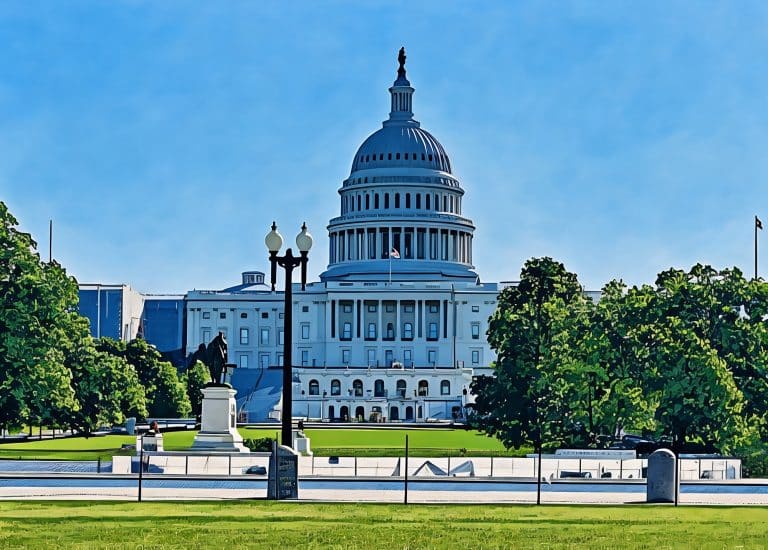
For nearly a decade, the United States has not been able to build high-voltage transmission fast enough to carry the power it plans to generate and consume. This week, Washington moved to do something structural about it. The Bipartisan American Affordability and Jobs Act of 2026, a sweeping permitting package introduced at the end of September by a bipartisan group of four senators, is heading toward a procedural vote on November 9, when the Senate returns from the midterm recess. Energy lawyers and grid strategists already describe its transmission title as the most consequential attempt at transmission permitting reform since the Energy Policy Act of 2005. It is a serious federal intervention in a wires business now constrained less by capital or demand than by the legal difficulty of connecting new resources.
The timing matters. The same week the bill advanced, new federal data showed the affordability pressure the measure is pitched to relieve. The Energy Information Administration’s October Short-Term Energy Outlook projected that wholesale power prices across the eleven trading hubs it tracks would average roughly $52 per megawatt-hour in 2026, about 11 percent above 2025. The PJM Interconnection footprint would see the steepest regional jump, at approximately 41 percent year over year. Against that backdrop, a bipartisan group decided the grid’s permitting apparatus had become too expensive to leave untouched.
A Bipartisan Breakthrough After Years of Stalemate
The bill is the product of Senators Mike Lee of Utah, Shelley Moore Capito of West Virginia, Martin Heinrich of New Mexico, and Sheldon Whitehouse of Rhode Island, the bipartisan leaders of the two committees with jurisdiction over energy and the environment. The coalition is notable because permitting reform had been pronounced dead more than once. The Manchin-Barrasso framework of 2024, which contained many of the same ideas, stalled and expired. By the end of 2025, with the administration having frozen federal permitting for wind and solar projects, Democratic Senate negotiators declared the effort “dead in the water.” A federal court injunction in the spring of 2026 against the renewables permitting pauses, followed by signals from the administration that it would treat wind and solar more evenhandedly, reopened the door. The compromise introduced on September 30 reflects that détente. Republicans secured faster approvals and narrower judicial review for conventional energy and minerals. Democrats won a strong transmission title and assurances that large new loads would help pay for the grid they strain.
Since introduction, the sponsors have been circulating a manager’s amendment and soliciting feedback ahead of the November 9 vote to proceed. House leadership has offered qualified encouragement: Speaker Mike Johnson has endorsed the measure’s general thrust, while the chairman of the House Energy and Commerce Committee has signaled he wants changes before committing. Passage is not guaranteed, but the legislation has advanced further, and drawn broader industry attention, than any comparable effort in years.
Federal Backstop Siting Takes Center Stage
The core of the transmission title, and its most contested feature, is a substantial expansion of the Federal Energy Regulatory Commission’s (FERC) transmission siting authority. Under current law, FERC may step in to permit an interstate line only within a National Interest Electric Transmission Corridor designated by the Department of Energy (DOE). That prerequisite is cumbersome, and it has left the backstop authority largely dormant since its creation. The bill removes the corridor requirement entirely. DOE’s congestion study under the Federal Power Act would still identify constrained geographic areas, but those findings would no longer be a precondition for a federal permit.
The new framework would allow FERC to issue a construction permit for a line capable of carrying at least 230 kilovolts in interstate commerce, including lines running from the Outer Continental Shelf to shore, provided the Commission finds the project serves the national interest and a state-failure trigger has been met, such as a state denying the application or failing to act within one year. For the largest lines, those at 345 kilovolts and above, FERC review would run concurrently with state review on parallel timelines, though the Commission still could not issue its permit until the state-failure finding was made. Developers who have watched multistate projects die in the gaps between state commissions would gain a credible federal backstop. State regulators and some incumbent utilities see an encroachment on authority they have guarded jealously, and the federalism question is shaping up as the bill’s central political fault line.
Rewiring Regional and Interregional Planning
Backstop siting generates the headlines, but the planning reforms may prove more important structurally. The legislation would add a section to the Federal Power Act establishing mandatory interregional transmission planning across the country and requiring every planning region to use common input assumptions, common models, and a shared list of benefits when evaluating projects. Regional and joint interregional plans would be due within two years of enactment and refreshed at least every four years, with the Electric Reliability Council of Texas carved out in deference to its jurisdictional independence. A project selected through one of these plans would be deemed to satisfy most of the national-interest findings FERC would otherwise have to make. That ties the planning and permitting tracks together: a line vetted through a credible regional process reaches the permitting stage with much of its justification already established.
The bill also reaches into the interconnection queue, the chokepoint that has become the industry’s most visible symbol of dysfunction. Regions would be required to plan generation and transmission together over a twenty-year horizon and to publish interconnection locations with upfront, fixed, zonal per-megawatt costs, replacing the open-ended and frequently renegotiated cost estimates that have frustrated developers. Cluster studies would move to a single decision point, with nonrefundable security deposits and withdrawal penalties designed to flush speculative projects from the pipeline. FERC would be directed to open a rulemaking within a year on the use of artificial intelligence, machine learning, and automation in queue management. The backlog these provisions target is large. Lawrence Berkeley National Laboratory’s latest accounting finds roughly 8,200 projects, representing more than 2,000 gigawatts of generation and storage, waiting for a grid connection. The overwhelming majority is wind, solar, and batteries, and the historical completion rate is in the mid-teens in percentage terms.
Who Pays: Beneficiaries, Data Centers, and the Affordability Pitch
The affordability framing that gives the bill its name runs through its cost-allocation provisions, which make a pointed choice about data centers. For lines that meet the national-interest criteria, costs would follow beneficiaries. Customers who receive no benefit, or only a trivial one, could not be charged involuntarily, though a utility could still recover such costs through a voluntary agreement. The treatment of large computational loads is more striking. Transmission costs attributable to data centers and similar facilities would be assigned to their owners and operators rather than spread across the general ratepayer base. For loads of 20 megawatts or more, the bill would mandate exit charges and bar their incremental costs from being recovered from other customers. It is a direct legislative response to growing public concern that households are subsidizing the grid upgrades demanded by hyperscale computing campuses.
That concern has political weight behind it. A battleground survey cited during the bill’s rollout found that heating and electric bills ranked as the third-most important issue for House swing-district voters, and the sponsors have leaned into the point. The Rhode Island senator said the bill would make data centers start paying their fair share. Whether the exit-charge mechanism survives intact is an open question, since large-load developers will lobby hard against provisions that single them out. Still, the logic of making the beneficiaries of load growth bear its costs is hard to resist amid rising retail prices. Grid Strategies estimates the country will need roughly 166 gigawatts of additional power capacity by 2030 to serve data centers, electrified transportation, and reshored manufacturing. Who pays for the wires to deliver that power has become a consumer issue.
The Right-of-First-Refusal and Advanced-Technology Flashpoints
Two further provisions are drawing attention out of proportion to their length. The bill would eliminate the federal right of first refusal that effectively guarantees incumbent utilities the chance to build new regional transmission lines in their territories. Those projects would open to competitive development, while states would remain free to adopt their own protections. Competitive-transmission advocates have long argued that the right of first refusal inflates costs and slows construction by foreclosing competition. Incumbent utilities regard it as essential to orderly, accountable grid development. A company’s position on this provision is a reliable predictor of where it stands on the overall package.
The legislation would also require public utilities to deploy advanced transmission technologies, including dynamic line ratings, power-flow controllers, topology optimization, and advanced conductors that can add capacity to existing corridors, wherever the benefit-cost ratio exceeds one. FERC would be empowered to penalize noncompliance, potentially through a reduced return on equity. To speed the easiest projects, reconductoring within existing rights-of-way would be excluded from review under the National Environmental Policy Act and from the historic-preservation obligations of the National Historic Preservation Act. The carve-out acknowledges that rebuilding an existing line with better wire is not the environmental undertaking that a greenfield corridor represents. Together, the provisions reflect a congressional judgment that the cheapest, fastest transmission capacity is often on poles the industry already owns.
A Divided Industry and an Uncertain Path
Industry reaction does not break along tidy lines. American Electric Power and Berkshire Hathaway Energy have come out in support, while other large utilities have stayed silent and the Edison Electric Institute has taken no formal position. Duke Energy and Southern Company, which helped sink the 2024 permitting package, could become sources of resistance, and at least one utility document opposes the expansion of federal authority and the elimination of right-of-first-refusal protections. Among transmission advocates and clean-energy groups, the mood is warmer. A prominent grid-policy analyst called the transmission title “very well crafted,” the Natural Resources Defense Council has endorsed that portion of the bill, and advocacy organizations report enthusiasm and cautious optimism about passage after the elections.
The path forward is uncertain. The November 9 vote is procedural, a test of whether the Senate will proceed to the measure at all, and the manager’s amendment that follows could reshape the most contested provisions. Observers warn that utilities uneasy about federal preemption could sink the bill or quietly hollow out its most popular features during markup. Unresolved disputes over the administration’s posture toward wind and solar permitting, which one sponsor flagged as still outstanding, could fracture the bipartisan coalition at any point. And the House, where the energy committee chairman wants changes, is a second hurdle even if the Senate delivers.
What Comes Next
Passage of the Bipartisan American Affordability and Jobs Act remains in doubt. What deserves the sector’s attention is that a durable bipartisan majority has concluded the status quo in transmission permitting is no longer defensible. Record load growth, rising wholesale prices, a 2,000-gigawatt interconnection backlog, and a voter base increasingly angry about electricity bills have produced a rare alignment of political incentives. Whether or not this bill crosses the finish line, its core ideas now define the debate: a revived federal siting backstop, mandatory interregional planning, beneficiary-pays cost allocation, large-load exit charges, and an advanced-technology mandate. Developers, utilities, regulators, and the large-load customers reshaping demand should treat it as the clearest preview yet of the regulatory framework that will govern the next decade of grid expansion. The November 9 vote will not settle the matter, but it will show how close Washington has come to confronting the transmission bottleneck.