
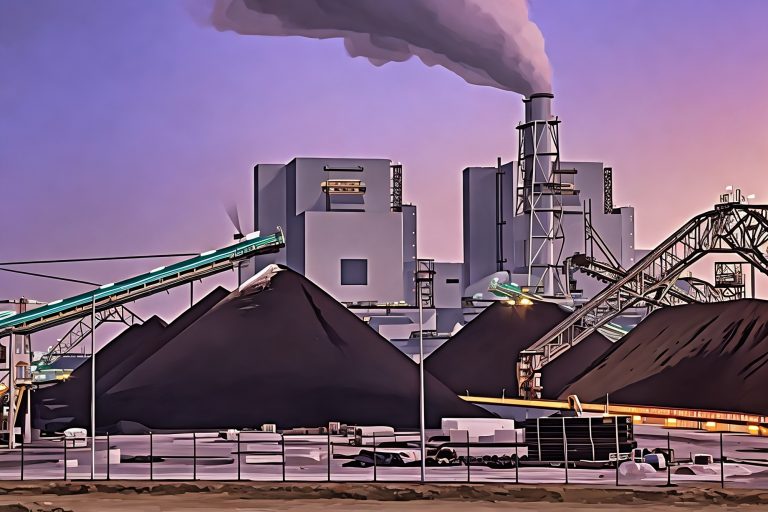
So, I was catching up on the news this morning with a second cup of coffee and saw something that really made me stop. The Tennessee Valley Authority just voted to keep their Kingston and Cumberland coal plants running indefinitely. If you’ve been following the industry for the last few years, you know how big of a deal that is. Not long ago, every headline was about the “end of coal” and how fast we could retire these old units to meet carbon goals. Now, the nation’s largest public power provider is making a complete 180.
It’s not just TVA either. Across the country, we are witnessing a major management shift. The “energy emergency” declared late last year has altered the situation for everyone. We find ourselves in a position where the demand for power—driven by those massive AI data centers and the reshoring of manufacturing—is increasing much faster than we can develop new wind, solar, or battery capacity.
For those of us in leadership roles, this is a critical moment. For years, the pressure from investors and regulators focused on the transition to clean energy. But now, the challenge is maintaining reliable power. If a utility shuts down a coal plant and then has to inform customers of rolling blackouts because a winter storm struck and the new resources couldn’t keep up, that leader isn’t going to keep their job for long.
This isn’t a retreat from clean energy; it’s a reality check on reliability. We are discovering that you can’t retire “firm” power until you have a rock-solid replacement ready to go on day one. The current management challenge is about balancing the long-term vision with the immediate, harsh reality of a grid pushed to its breaking point. We’re shifting from a mindset of “how fast can we close it” to “how long do we need it.” It’s a difficult conversation with stakeholders, but it’s the most honest one we can have right now.
The Math Behind the U-Turn
Let’s discuss why this is happening. The math on the grid is quite straightforward, even if the politics are complicated. You need enough generation capacity to meet peak demand, plus some extra for safety. For decades, demand was stable, allowing us plenty of time to replace old plants with new ones. But the data center boom changed everything. A single AI data center can draw hundreds of megawatts continuously. You can’t meet that kind of steady, large load with resources that only produce power when the sun shines or the wind blows.
The TVA board cited exactly this when they made their decision. They observed that demand was increasing so rapidly that retiring those 3,000 megawatts of coal would leave them dangerously short. When you look at regions like PJM or MISO, the story is the same. They are warning that plants are retiring faster than new ones are being built.
As a manager, you’re dealing with a supply chain for new equipment that’s completely backed up. If you ordered a high-voltage transformer today, you might not receive it for three years. If you’re planning to build a new gas plant to replace a coal unit, the permitting process could take a decade.
In that environment, the safest management decision is to keep what you already have. A coal plant that is connected to the grid and sitting on a stockpile of fuel is worth its weight in gold when a polar vortex hits. We are seeing a return to the basics of power engineering: you need dispatchable power you can rely on when the weather turns severe. Leaders are understanding that reliability is the foundation of public trust. You can have the cleanest grid in the nation, but if it doesn’t function when it’s ten degrees below zero, nobody will thank you.
The Pressure of the Energy Emergency
The federal government’s declaration of an energy emergency late last year provided utility leaders with the justification they needed to make difficult decisions. It shifted the tone of the discussion from “why aren’t you moving faster on carbon” to “what do you need to keep the grid stable.” President Trump’s recent executive order directing the Pentagon to use coal is just another sign that the winds have changed.
For a utility CEO, this represents a major shift in the regulatory environment. For a long time, the risk of keeping a coal plant open was being viewed as either a sign of lagging behind or a polluting stance. Now, the risk of shutting it down is seen as acting irresponsibly. We’re also observing regulators at the state level begin to push back on retirement plans. They are demanding more proof that the grid will stay stable without those units.
This puts management in a tough position. You might have already assured your board and investors that you’d be “coal-free” by a specific date. Now you need to go back and explain why that is no longer the plan. It takes a lot of leadership courage to admit that the old strategy no longer fits the current facts.
But the facts are clear. FERC data shows that natural gas installations more than doubled in 2025, and coal’s contribution to the winter peak remains significant. We are entering an era of “all-of-the-above” because we simply don’t have the luxury of picking favorites anymore. The emergency isn’t just a label; it’s a reflection of how tight the margin has become. Leaders who ignore that margin are playing a dangerous game with their customers’ safety.
Managing the Transition Tension
So, how do you lead through this without seeming like you’re abandoning your environmental goals? It all comes down to how you frame the story. The best leaders I see are discussing this as an “orderly transition.” They are honest that the path to zero-carbon is longer and more complicated than we initially believed.
It’s not a binary choice between coal and clean energy. It’s a process. You keep the coal burning as a bridge while developing the next generation of power. That means moving more quickly on things like small modular reactors, long-duration energy storage, and optimizing the gas plants we already have.
This creates a significant operational challenge for middle managers. They must keep an old coal plant running—one that perhaps hasn’t received much investment lately because it was scheduled to close—while also managing a team that is developing new technology. They need to maintain the morale of the workers at that coal plant who believed their jobs were disappearing.
You also need to address the “regulatory lag.” If you keep a coal plant open, you must cover its maintenance and environmental upgrades. Will the commission let you recover those costs? Or will they argue you should have planned better?
This is where stakeholder engagement becomes your most powerful tool. You need to be in the room with your regulators, community leaders, and major industrial customers to explain the “why” behind these decisions months before you submit any paperwork. You must show them the reliability data and load growth projections. If you wait until the rate case to tell the story, you’ve already lost the argument.
The Reliability First Mindset
We are observing a cultural shift within utility companies. For a few years, the “innovation” and “sustainability” teams received most of the attention. They were the ones attending conferences and securing budgets. However, recently, the “operations” and “planning” teams have regained the spotlight.
The focus is returning to the core mission: reliability and affordability. As a leader, you need to ensure that these teams communicate effectively with each other. You can’t have a sustainability team making promises that the operations team can’t fulfill.
This means treating your Integrated Resource Plan (IRP) as a living document, not something you file away every three years and forget. You need to stay flexible. If a major tech company announces a new 1-gigawatt data center in your territory, your plan must adapt immediately.
Reliability is no longer just a technical metric; it has become a brand. Customers see their neighbors in other states facing outages and higher prices, and they turn to their own utility for reassurance. The successful leaders are those who are transparent about the difficulties. They say, “Look, we want to get to clean energy, but we aren’t going to sacrifice your ability to heat your home to get there.”
This “reliability first” mindset is also changing our hiring approach. We still need software experts and data scientists, but we’re also recognizing the importance of experienced plant managers and transmission engineers who know how to maintain the old equipment. We’re valuing experience and “firm power” knowledge more than we have in the past decade.
The Hidden Costs of Premature Retirement
One aspect that isn’t discussed enough in the boardroom is the hidden cost of shutting down a plant too early. When you close a plant, you’re not just losing the megawatts. You’re losing the interconnection point, the skilled workers who operated there, and often ending up with a pile of “stranded assets” that customers still have to pay for.
If you shut down that plant and then realize you need it again, the cost to restart it or replace it quickly is extremely high. We saw this in California and some parts of Europe. They closed plants, demand increased, and they had to spend billions on emergency generators that were much more expensive and dirtier than the plants they closed.
Utility leaders are beginning to realize that “optionality” is a valuable asset. Maintaining a coal plant in a “reserve” or “standby” mode might cost a little extra, but it’s a cheap insurance policy compared to a grid failure.
This marks a shift in financial thinking. We’re moving away from a model that only values efficiency and toward one that emphasizes resilience. Resilience is the ability to handle the unexpected, and in 2026, the unexpected is becoming the norm.
Management needs to be able to quantify this value for regulators. You have to be able to say, “Keeping this plant open costs X, but the risk of not having it costs ten times X.” We are improving at modeling these tail-end risks, and that data makes it much easier for leaders to justify keeping fossil units online for a few more years. It’s not about being “pro-coal”; it’s about being “anti-blackout.”
The Path Forward
The decision by TVA to reverse its coal shutdowns marks a significant moment. It signals that the “transition” phase of the energy industry has entered a new, more realistic chapter. The drive for a cleaner future hasn’t disappeared, but it has been softened by the reality that the world currently needs more power.
For leaders in the electric power industry, the way forward is about balance. We must keep our focus on the carbon goals for 2040 and 2050, but also stay alert to the controls for 2026 and 2027. We need to guide our organizations through the tension of maintaining the old while building the new.
This calls for a new approach to communication. We must be upfront with our customers that reliability comes at a cost, and sometimes that cost involves keeping an old coal plant running for a few more seasons. We also need to be truthful with our regulators that we require more flexibility to meet the demands of the AI economy.
The “reliability U-turn” isn’t a failure of vision. It’s a sign of mature leadership. It’s an acknowledgment that the grid is too vital to mishandle. As we move through the rest of 2026, the companies that thrive will be the ones prioritizing their foundation. The lights must stay on. Everything else follows.