
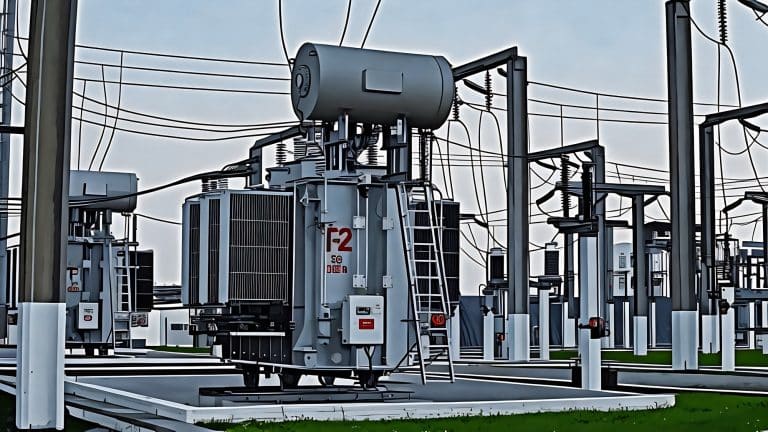
When President Trump signed Executive Order 14420 on August 26, 2026, he did more than add another directive to the federal energy docket. By declaring a national emergency over the equipment that moves electricity across the country, the administration recast a supply-chain problem the industry has wrestled with for years as an acute matter of national security. The order restricts foreign-made transformers, inverters, batteries, circuit breakers, and the software that runs them from connecting to the United States bulk power system. It also contemplates a step the sector has rarely had to confront: removing already-installed hardware from substations if regulators decide it poses too great a risk. For an industry already stretched by record demand growth and multi-year equipment backlogs, the order lands at a delicate moment and forces utilities, developers, and manufacturers to treat bulk-power system security as a boardroom issue, not merely a procurement concern.
The result is not just a procurement restriction, but a reordering of risk across the electric sector: security risk shifts from cyber teams to executive leadership, supply-chain risk shifts from vendors to project schedules and rate cases, and compliance risk shifts from legal footnotes to core infrastructure strategy.
A National Emergency for the Bulk-Power System
The order’s legal architecture is as important as its headline. Rather than rely only on the sector-specific authorities already held by the Federal Energy Regulatory Commission and the North American Electric Reliability Corporation, the administration invoked the International Emergency Economic Powers Act, the same statute that underpins sanctions regimes and trade embargoes. That choice gives the Department of Energy broad latitude to prohibit transactions it deems an unacceptable risk and signals that the White House views the grid not only as domestic utility infrastructure, but also as a front line in a broader contest with strategic rivals. The order directs the Secretary of Energy to develop implementing rules within 120 days, pushing the first binding regulations into late December 2026, with recommendations to revise federal acquisition rules following at 180 and 270 days.
Executive Order 14420 applies to high-voltage infrastructure rated at 69 kilovolts and above, deliberately excluding the local distribution networks that deliver power to homes and small businesses. Within that perimeter, the covered equipment list is expansive: power transformers and generator step-up units, inverters and battery energy storage systems, protective relaying and control systems, and the firmware, software, and remote-access capabilities embedded throughout. The order targets what it calls covered foreign entities: companies tied to countries subject to United States arms embargoes, including entities owned by, controlled by, or subject to the direction of those governments. In practice, the definition points unmistakably at China, and the order functions as a Chinese grid equipment ban even as the final roster of designated entities remains to be filled in during rulemaking.
The order is not written on a blank page. It revives and broadens the ambitions of Executive Order 13920, the 2020 bulk-power directive that was suspended in early 2021 before it could bite. This time the administration has learned from that episode, building a more durable framework and reaching for emergency economic powers rather than depending on regulators whose priorities can shift with each change in leadership. The message to the market is that the government intends to make grid supply chain security a permanent feature of how the country buys and operates its most critical electrical assets, not a policy that evaporates with the next administration.
The Supply-Chain Reality Behind the Order
To understand why the order is so consequential, one has to appreciate how dependent the American grid has become on foreign manufacturing at exactly the moment it can least afford disruption. The equipment covered by the directive is also the equipment the country cannot easily replace. Large power transformers, the multi-ton workhorses that step voltage up and down across the transmission network, now carry unusually long lead times. Wood Mackenzie pegged average power transformer lead times at roughly 128 weeks, with generator step-up units closer to 144 weeks, and some buyers report waits approaching four years. Prices have climbed in lockstep, with power transformers up about 77 percent since 2019 and certain distribution classes rising as much as 95 percent.
Demand explains the squeeze. Power transformer demand surged well over 100 percent between 2019 and 2025, driven by data-center construction, electrification, and the replacement needs of an aging fleet in which more than half of the country’s roughly 40 million distribution transformers have exceeded their expected service life. Against that demand, Wood Mackenzie projected a 30 percent shortfall in power transformers for 2025 alone. Domestic manufacturers have announced nearly 1.8 billion dollars in North American capacity expansions, but those factories will not come online in force until 2027 and 2028, leaving a gap that imports have filled.
Batteries and inverters tell an even starker story. The International Energy Agency has estimated that China produces 80 percent or more of the world’s supply of certain grid components, including lithium-ion battery cells and key solar hardware. Battery energy storage, one of the fastest-growing resources on the American grid, is overwhelmingly exposed to Chinese production, and solar inverters are not far behind. When the order forces developers to scrutinize the provenance of every inverter and battery rack, it is asking them to unwind a global supply chain that took two decades to build and has no ready domestic substitute at scale. That is the tension at the heart of Executive Order 14420: the equipment deemed a security liability is also the equipment in shortest supply, and every sourcing restriction tightens a market already close to breaking.
From Backdoors to Boardrooms: The Cybersecurity Case
The order’s authors did not frame the problem primarily in economic terms. Their central argument is one of grid equipment cybersecurity, and it rests on the fear that hardware built abroad can carry hidden capabilities that turn critical infrastructure into an instrument of coercion. Officials warned of foreign supply-chain disruptions and targeted attacks that exploit built-in backdoors for remote access, and the order specifically prohibits equipment that poses risks of sabotage, unauthorized access, malicious remote operation, or supply disruption. The concern extends beyond transformers to the industrial control systems, remote terminal units, and programmable logic controllers that orchestrate grid operations, along with the firmware and communications modules woven into modern power electronics.
These anxieties are not purely theoretical. In May 2025, reporting revealed that engineers inspecting Chinese-made solar inverters had discovered undocumented communication devices, including cellular radios not listed in product documentation, that could bypass firewalls and establish channels operators could neither see nor control. That discovery rippled through utilities and regulators on both sides of the Atlantic, crystallizing a worry that had long lived in classified briefings: a rival could embed dormant capabilities in equipment installed by the thousands and activate them at a moment of crisis. Set against a backdrop in which state-sponsored actors have already probed and, in some cases, penetrated American grid networks, the order’s treatment of remote-access-capable hardware as a strategic vulnerability marks a shift from viewing cyber risk as a software patching exercise to treating it as a hardware sovereignty question.
Compliance in the Fog: What Utilities and Developers Face
For the companies that must live with the order, the immediate challenge is uncertainty. Utilities and manufacturers are directed to cease acquisitions, imports, transfers, and installations of covered equipment from designated foreign entities after the effective date, while also preparing for the possibility that already-installed systems could be subject to mitigation agreements or outright removal. That retroactive dimension is unusually sweeping. Asking an operator to disconnect a transformer or battery installation already energized and serving load raises reliability questions that regulators will have to weigh carefully, and the order acknowledges that constraint by requiring the Department of Energy to consider reliability impacts before compelling removal.
The contractual fallout may prove as disruptive as the physical one. Many engineering, procurement, and construction agreements and their associated financing documents were signed without any contemplation of prohibitions grounded in emergency economic powers. Change-in-law and force majeure clauses could be triggered, opening disputes between developers and lenders over who bears the cost when a project’s planned equipment suddenly becomes unusable. Legal advisers are urging clients to document the initiation dates of pending transactions relative to August 26, to audit supply chains for exposure to covered foreign entities, and to establish equipment replacement reserves reminiscent of the financing conditions that emerged after the 2020 order. Battery storage developers face the sharpest exposure given China’s dominance, but few corners of the sector can assume they are untouched.
Reliability, Cost, and the Affordability Tension
Layered over the security logic is an economic reckoning the industry cannot avoid. Utilities have projected roughly 1.1 trillion dollars in capital investment from 2025 through 2029, following 1.3 trillion dollars in the preceding decade, and a meaningful share of that spending flows through the equipment categories the order now restricts. Narrowing the pool of acceptable suppliers while domestic capacity remains years from catching up to demand points first toward higher prices and longer waits, even if the long-term goal is greater security. Those costs do not vanish; they migrate onto customer bills at a moment when electricity affordability has already become a live political issue, with retail rates outpacing inflation.
The counterargument, and the one the administration is betting on, is that the cost of a compromised grid dwarfs the premium of a secure one. A coordinated attack that disabled transformers across a region could take months or years to repair given current lead times, and no insurance policy compensates for an economy without power. From that vantage, paying more for domestically sourced or trusted-ally equipment is not a burden but an investment in resilience. Reconciling that long-term security calculus with near-term affordability pressures will define how state regulators, who ultimately approve the rate recovery, receive the federal mandate. The order can prohibit a transaction in Washington, but the bill arrives in statehouses and public utility commissions, and that is where its political durability will be tested.
The Road to Rulemaking
For all its sweep, Executive Order 14420 is still a framework awaiting content. The decisive questions belong to the 120-day rulemaking now underway at the Department of Energy: which countries and entities land on the designated list, how ownership and control are defined for companies with tangled multinational structures, how dual-sourced or partially assembled equipment is treated, and how quickly the department can render determinations on individual transactions without freezing procurement altogether. Until those answers arrive in late December, companies operate in a gray zone, obligated to prepare for restrictions whose precise boundaries remain unknown.
The smart posture, and the one advisers are counseling, is engagement rather than paralysis. The rulemaking process is open, and the definitions that emerge will shape the market for years, so utilities, developers, and manufacturers have every incentive to help shape licensing criteria and pre-qualified vendor frameworks that protect security without strangling supply. The order’s success will ultimately be measured not by the toughness of its prohibitions, but by whether the country can stand up trusted manufacturing fast enough to make those prohibitions livable. That is a challenge of industrial policy as much as security policy, and it will unfold over years, not months. What is already clear is that grid supply-chain security has moved from a specialist concern to a boardroom priority, and the equipment humming inside America’s substations will never again be purchased without asking where it came from and who might be listening.
Conclusion
Executive Order 14420 marks a turning point in how the United States thinks about the physical foundations of its grid. By fusing supply-chain policy, cybersecurity, and emergency economic authority into a single directive, the administration has declared that the machines carrying the nation’s electricity are too important to leave to the open market alone. The order’s ambitions are considerable and its costs are real, and the coming rulemaking will determine whether it becomes a workable safeguard or a new source of bottlenecks in an already strained system. Either way, the era in which grid equipment was chosen on price and lead time alone has ended. For an industry racing to power an electricity-hungry economy, the challenge now is to build a grid that is not only bigger and faster, but demonstrably trustworthy, without leaving customers to shoulder a bill they cannot bear. The wires that bind the country together have become a matter of sovereignty, and the decisions made in the coming months will echo across the grid for a generation.